Hao Li
My Portfolio
Hi, This is Hao 👋
Hi, This is Hao 👋
I work on explanable AI for biomedical sciences. Previously, I was a Founding Engineer helping build an EdTech AI startup in San Jose—Paradigm.Study—where we built scalable adaptive learning agents and knowledge-tracing systems to deliver personalized learning experiences. My research on the decomposition of LLM dynamics (starting from memorization and training dynamics LLMs — a decomposition story ) has recently been applied to agent system testing, and some following-up works with my code, proofs, and PRs directly used by the official OpenClaw-ShellBench benchmark repo.
If you check out my Google Scholar page, you’ll see a focus on ML+Bio and the interpretation of large models. I like to throw information theory, stats, and applied math into the works (although I am not always lucky). Currently, I am an AI Research Analyst at WashU Medicine and an incoming WashU Computer Science & Engineering PhD student. Following the FuhaiLiAILab, I’ve been deeply exploring AI+Bio. One of our works is OmniCellAgent, a multi-agent orchestration system that navigates single-cell omics and biomedical literature to help cure disease. But the field that interests me most is what comes next: building AIs that learn from the structures of science and inform new structures for science. I believe the biggest breakthroughs won’t come from just scaling data, but from integrating causal and physics structures to create AI that natively understands the underlying rules of the physical and biological world.
My history? I took math as an undergrad at UC Irvine, wanted to build things so I did a few hackathons, and then went on to get my Master’s in Statistics at Columbia University. But my fascination with chaos theory, fractals, and complex multi-body systems actually began with a very specific hobby: designing, building, and competing with ultra-lightweight F3P indoor precision aerobatic RC airplanes. Why did I choose to do research? I noticed there are fundamental gaps, oversights, and alternative theories that haven’t been explored. Throughout my experiences, there are many surprises and beautiful findings yet to be looked at—especially from the problems jointly given to us by nature and logic.
**On why explanability would become bottlenecks of RSI and Auto research ** As AI increasingly automates scientific discovery, mathematical reasoning, and model development, the central challenge may shift from generating solutions to verifying them. Large language models can assist with difficult mathematical proofs and novel algorithm designs, but the growing volume and complexity of generated results make it increasingly difficult to ensure their correctness. Formal theorem provers demonstrate how verification can become more systematic, while AI-generated algorithms that outperform human-designed alternatives may remain difficult to interpret. I believe this makes explainability essential not only for understanding model predictions or improving generalization, but also for establishing the trustworthiness of automated discovery.
Explainability provides a level of abstraction that allows us to reason about a system without understanding every detail of its implementation or testing every possible case. By identifying structural properties, mathematical constraints, and underlying mechanisms, we can predict the behavior of models and classes of algorithms before running them, compare their outputs against physical or biological knowledge, and verify their consistency with explicit assumptions. As AI systems become more capable of conducting research and improving their own methods, the volume of generated results will continue to grow, making such structural understanding increasingly important. My research interest is therefore to connect explainable AI with mathematical theory, causal reasoning, and verifications against structural assumptions, developing methods that help us understand not only what a system does, but also what we can reliably know about its behavior, why we know it, and under which assumptions that knowledge remains valid.
On the future of explanable AI. Explainability has long been an important challenge in artificial intelligence and mathematical modeling, particularly for complex systems that are only partially observed. Beyond improving robustness, predictive performance, and trustworthiness, explainability provides structural interpretations that help us understand the mechanisms underlying a system, the probabilistic implications of its behavior, and the relationships between its properties and the design of the models used to represent it. These insights can advance our understanding of complex systems from multiple perspectives, revealing relationships that might otherwise remain hidden. Explainability can serve not only as a means of interpreting known behavior, but also as a tool for scientific and methodological discovery. When training models on real-world data, we often encounter unexpected behaviors, anomalous results, or non-trivial patterns that are difficult to understand through empirical observation alone. Structural and theoretical analysis can help explain these phenomena, distinguish meaningful properties from artifacts of a particular experiment, and generate hypotheses for further investigation. Conversely, such analysis can help us anticipate the properties, limitations, and potential failure modes of a model before it is trained or implemented, providing theoretical guidance for the design of future models. Approaches such as causal graphs, neural ordinary differential equations (neural ODEs), and physics-informed neural networks (PINNs) exemplify how incorporating causal, dynamical, or physical structure into machine learning can contribute to both scientific discovery and practical applications.
However, much of explainable AI has focused either on interpreting specific model architectures after they have been developed or on designing models whose structures are inherently interpretable. Both approaches face fundamental limitations. First, explanations tied to a particular architecture or training procedure may become less relevant as machine learning evolves. By the time a comprehensive interpretation framework is established, the underlying model or its training paradigm may already have changed. This is particularly apparent in rapidly evolving areas such as large language models, where theoretical analyses based on information theory and dynamical systems may depend on assumptions that no longer hold for newer architectures or training procedures. Second, some oversaw the aspect that explanations necessarily involve simplification. A useful explanation does not need to account for every detail of a system; instead, it identifies the essential properties and relationships that can be understood under explicit assumptions. Such abstractions allow us to draw meaningful inferences without reproducing every experiment or resolving every microscopic detail. They can also yield representations and principles that are easier to analyze, generalize, and integrate into larger systems. The challenge, therefore, is not simply to explain individual models more thoroughly, but to develop explanatory principles that remain useful as models, methods, and scientific understanding advance.
My research addresses this challenge through two complementary objectives. The first is to focus on important scientific problems, particularly those arising in complex biological and biomedical systems. These systems present fundamental questions that remain difficult to resolve through machine learning alone, conventional numerical simulation, or theoretical analysis in isolation. Their complexity, however, is also an opportunity: biological systems often combine physical mechanisms, causal relationships, and observable signals in ways that can inspire generalizable modeling principles. By developing methods to address these problems, we can pursue practical scientific discoveries while identifying algorithms and structural insights that transfer across domains—for example, between electrocardiogram (ECG) modeling in cardiology and electroencephalogram (EEG) modeling in neuroscience. The goal is not merely to produce a successful model for one application, but to uncover shared properties that can support the modeling and interpretation of other complex systems.
The second objective is to develop model-agnostic, nonparametric, or semiparametric methods wherever appropriate, so that explanatory frameworks can adapt to advances in both theory and machine learning architectures. A robust methodological framework should not depend unnecessarily on one specific neural network or optimization procedure. Improvements in optimization, statistical bounds, or theoretical guarantees should be incorporable without requiring the entire framework to be redesigned. Likewise, when new architectures emerge—as transformers have expanded the range of applications previously dominated by recurrent architectures such as long short-term memory networks—the underlying methodological principles should remain applicable whenever their assumptions are satisfied. This separation between the scientific problem, the methodological framework, and the choice of model architecture can create a bridge between advances in machine learning and the scientific questions we seek to answer.
On building something different At a deeper level, my motivation comes from a desire to challenge two widely accepted conventions in modern machine learning: that increasingly capable models must inevitably become black boxes, and that interpretability and predictive capability must be traded against one another. Through my theoretical explorations and the research projects I have developed, I have come to believe that there may be another path—one in which structural understanding, theoretical guarantees, and empirical performance reinforce one another rather than compete. This possibility may not always be immediately apparent within existing modeling paradigms, and I recognize that realizing it requires substantial theoretical and experimental work. Nevertheless, the prospect of uncovering this alternative has convinced me that it is worth pursuing. I want to explore whether we can build models that do more than produce accurate predictions: models whose behavior can be understood, whose properties can be anticipated, and whose underlying principles can contribute to scientific knowledge beyond the specific tasks for which they were designed.
I embrace and criticize AI at the same time 🤔—but what can I do? If we can bring a little bit of light, then do it. 🔭
Cheers.
Hao Li
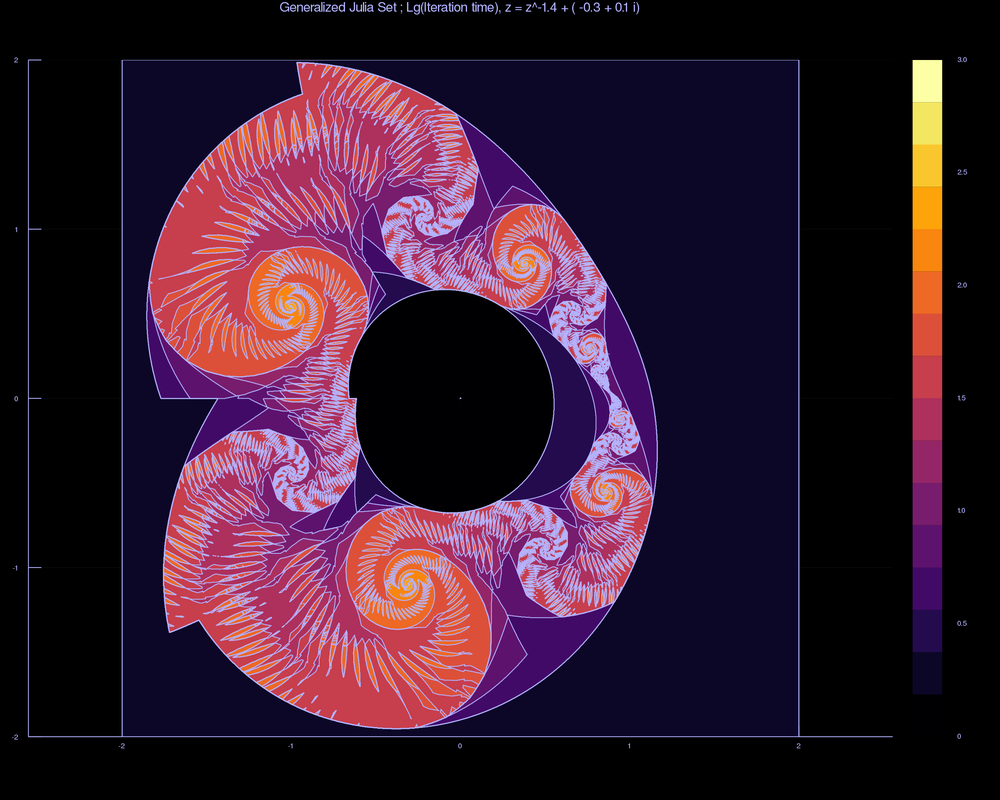
Figure from my site for fractal rendering: Gallery in Fractal Dimensions https://galleryinfractaldimension-temp.weebly.com/
Links
- Google Scholar Profile: https://scholar.google.com/citations?user=tDsQ2agAAAAJ&hl=en
- Paradigm.Study: https://www.paradigm.study/
- HaoLi111 GitHub Profile: https://github.com/HaoLi111
(Earlier) Project Showcase
Machine Learning
Earlier projects on Kaggle and on Hackathons
- sk_in_torch: Using PyTorch to fit scikit-learn models–and using GPU/CPU. (Python)
- ML_BioStats: Biostatistics problems on open datasets, Kaggle, hackathons, and eval.ai. (Jupyter Notebook)
- ChatMyArchive: A lightweight local file source searching repo for multiple files. For 2024 Brown Hackathon. (Jupyter Notebook)
- LinuxMLTroubleshoot: Problems encountered in building machine, trying to remove windows, install linux, conda, pytorch with cuda, rstudio, devtools and more–and how I got through. (Shell)
Math Modeling Code and Math Visualizations
- Previewer: Previewing datasets with save and systematic statistical approach. (R) submitted to2021 Shiny R Contest try it
Sample code for Meerschaert’s Mathematical Modeling (4th ed.), special thanks to the suggestion from the author of the book
- R sample codes for Meerschaert's Mathematical Modeling (4th ed.): (R)
- Sage math sample codes (SageMath, Python 2.7 jupyter notebook or use CoCalc)
- rMathModeling: General Math Modeling Tools for R. (R)
Fractals
- HypercomplexFractal: Hypercomplex fractal rendering with R. (R)
- Gallery in Fractal Dimensions: Figure from my site for fractal rendering.
- bryanhanson/LindenmayeR: Helped with visualizing Lindenmayer or L-Systems in R. (R)
- 1d-mapping-explorations: A project to utilize my previous R package (not documented yet) SeriesXplorer on 1d mappings. Detection of periodicity, chaotic behaviors and animated visualizations are the major tasks. (R)
- Interactive nb files with mathematica: For illustration of math concepts, with interactive slidebars. (Mathematica)
Model Aircraft Design and Computing
- ModelPlanePower: (R)
- eXpand: Code snippet for expanding 3D surfaces to a 2D projection - useful for building models of complicated 3D forms by folding 2D papers/foamboards or cardboards. (Julia)
-
rAviExp: R library for Model Aviation Exploratory design. (R) In deed you can still use some web UIs here Least climbing speed bound
design a plane with conventional concept
lift/drag and ratio and optimal Cl/Cd w.r.t. angle of attack